Marfa, Texas:
August 13th – 15th, 2016
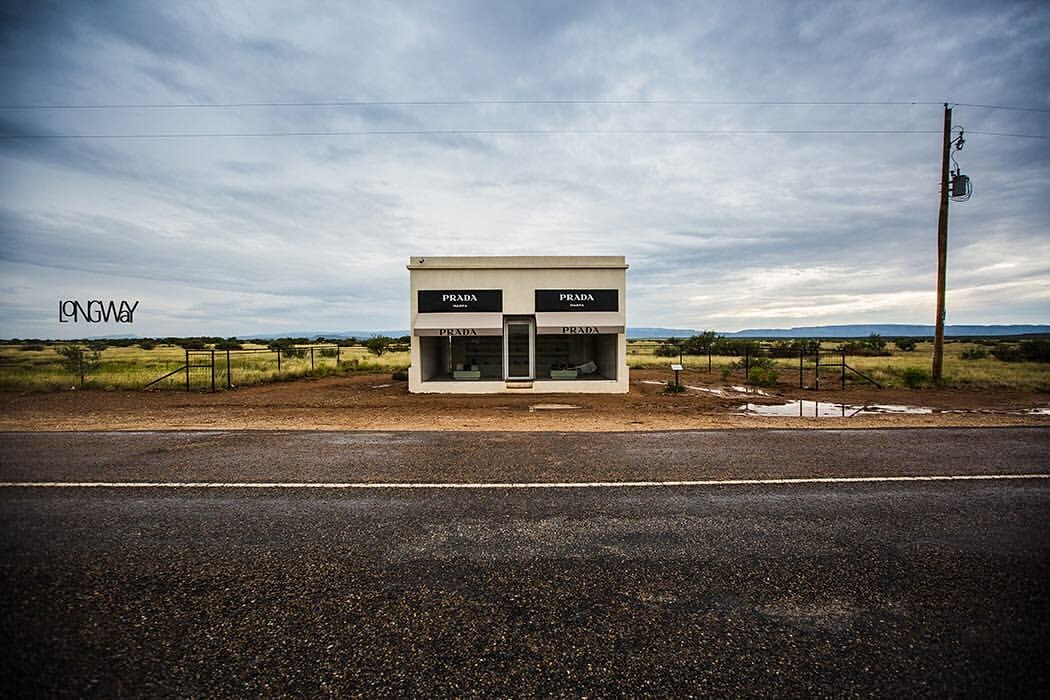
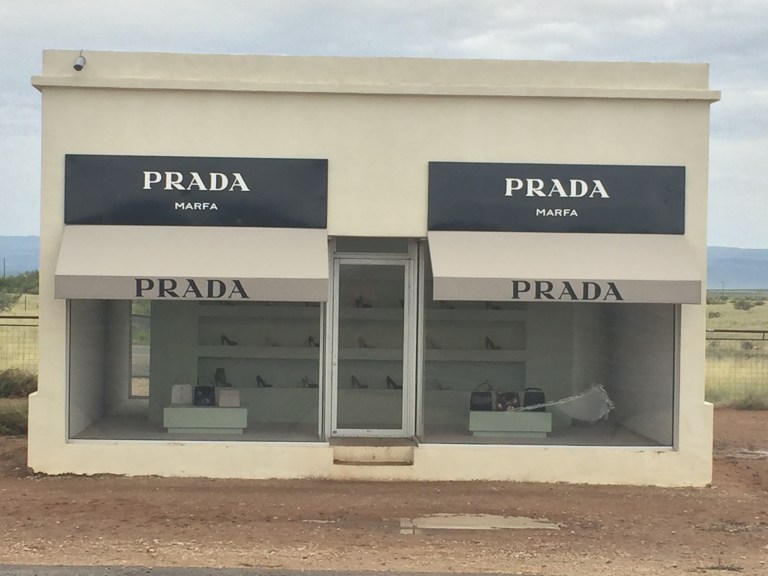
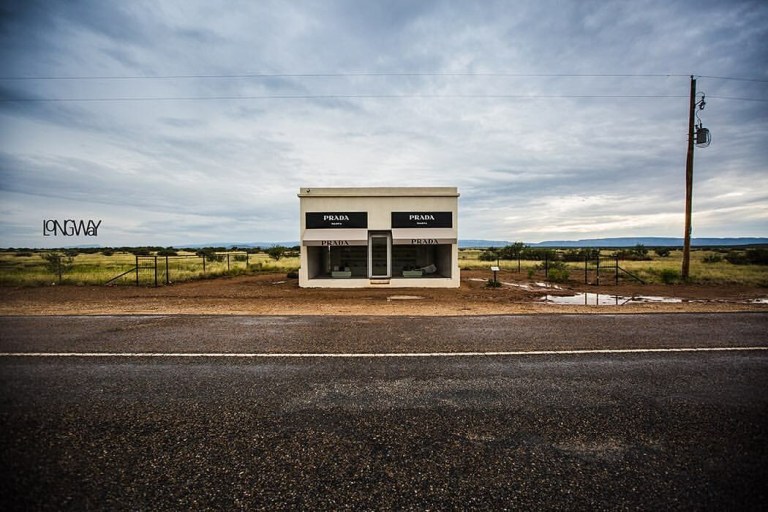
20 miles outside of Marfa Texas you will encounter the art installation known as Prada, Marfa. It is a lone storefront modeled after a Prada boutique and, while completely out of place in the desertscape of West Texas, it seems perfectly appropriate for the interesting blend of places and characters in this arts-centered border town. The Prada Marfa installation is old and the fashion is out of date. It was installed in 2005 and the styles on view within the installation, while authentic and of high value, speak to its age. The piece is in need of some conservation – the floor is littered with the carcasses of insects that gained entry into the space only to meet their demise when there proved to be no exit, and one pane of glass has sustained considerable damage, but it nevertheless serves as a welcoming point for visitors to this unique arts community in the middle of nowhere.
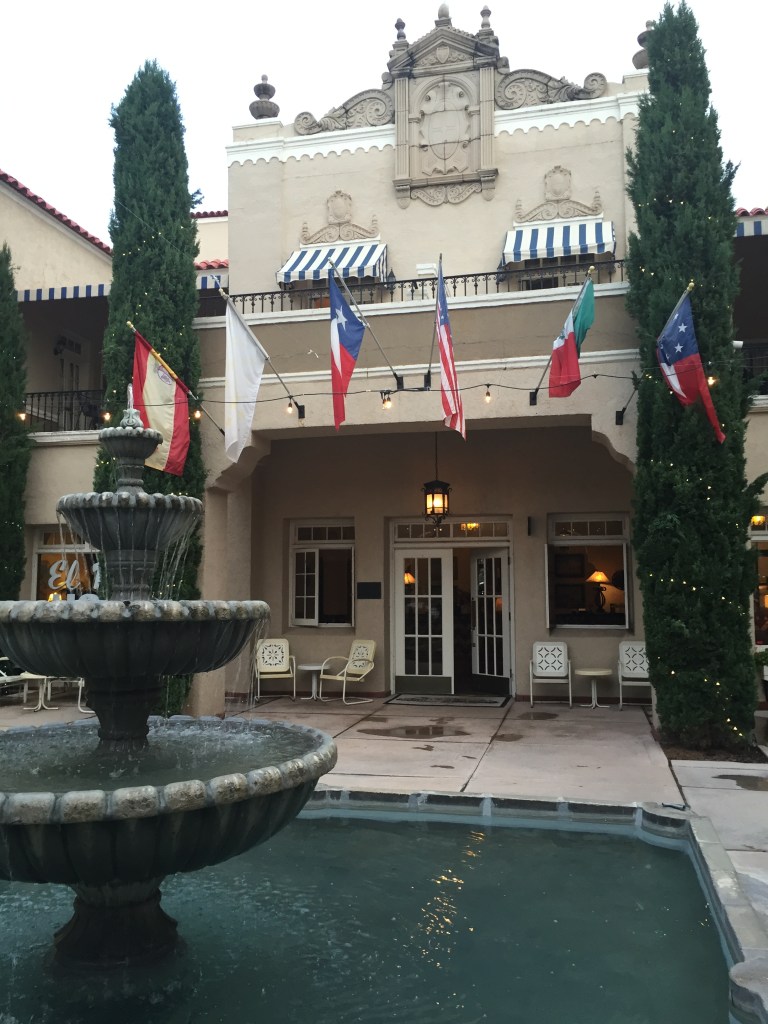
We made our home at the Hotel Paisano in the center of town, on the north side of the railroad tracks which once served as a point of segregation between the White and Hispanic residents of Marfa. Hotel Paisano was once a private residence and still contains much of the old world Texas charm. Each room has interesting features such as balconies with fireplaces, screened in porches, or terraces overlooking the courtyard. The rooms are of various sizes, and mezzanine rooms which face the courtyard are the most desirable. Mezzanine rooms opposite the courtyard have outdoor space, but limited views. A universal feature within the rooms is the tiny bathroom space. The shower is in the corner of the bathroom; thus the shower floor is also the bathroom floor. In the smaller rooms, the entire bathroom will be covered in water when someone uses the shower. This is a design flaw and something that the hotel management would be wise to address. It is probably wildly inconvenient for the housekeeping staff to repeatedly discover piles of soaking wet towels during the daily room turnover.
The hotel has a cozy bar adjacent to the courtyard for happy hour lounging, and a restaurant, which serves delicious breakfast burritos until 10 AM each morning. The rooms are close together and therefore relatively noisy. While filled with charm and a great jumping off point, the hotel is not for those who enjoy sleeping late.
There is a newer hotel in town, the Hotel Saint George, which offers a more contemporary aesthetic, a coffee bar and a bookstore. It is only one block from the Hotel Paisano, so it is still very centrally located. We did not look into the rooms, but the hotel website shows “modern” amenities like bathrobes and coffee makers.
Jett Restaurant in the Hotel Paisano has a decent menu with a range of salads, steaks, and fish options. Everything was well prepared and delicious although the best item of the night was probably the fried artichoke appetizer and the brownie a la mode dessert.
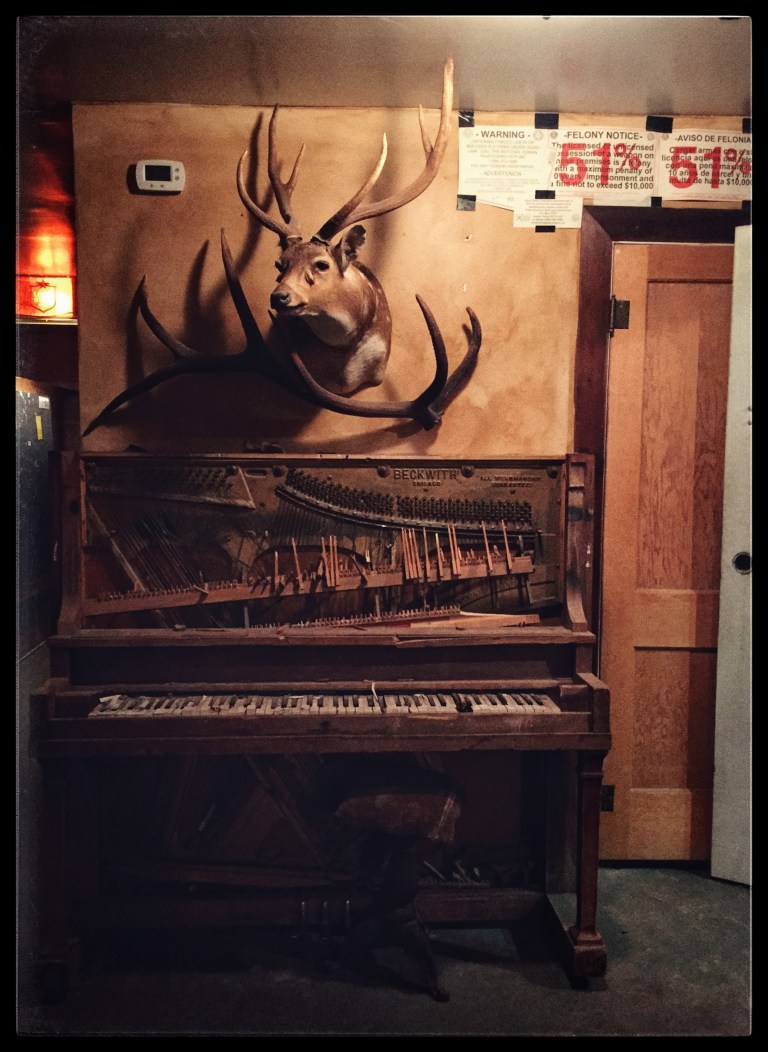
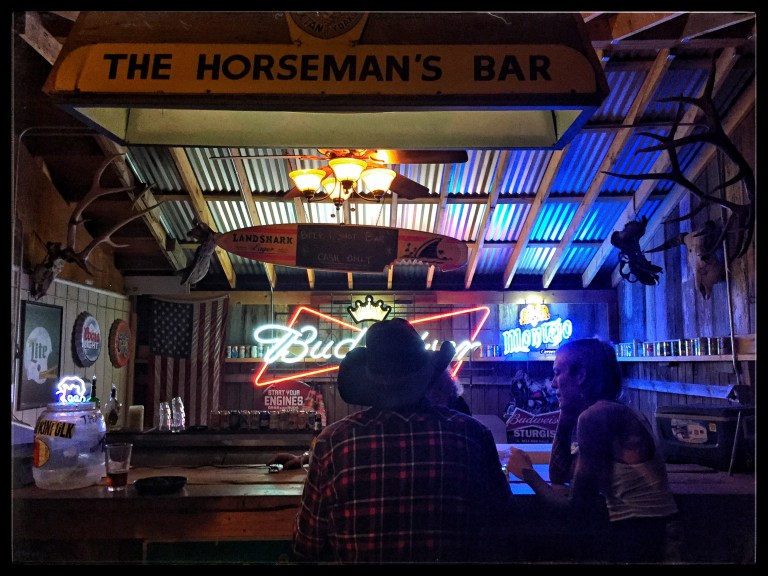
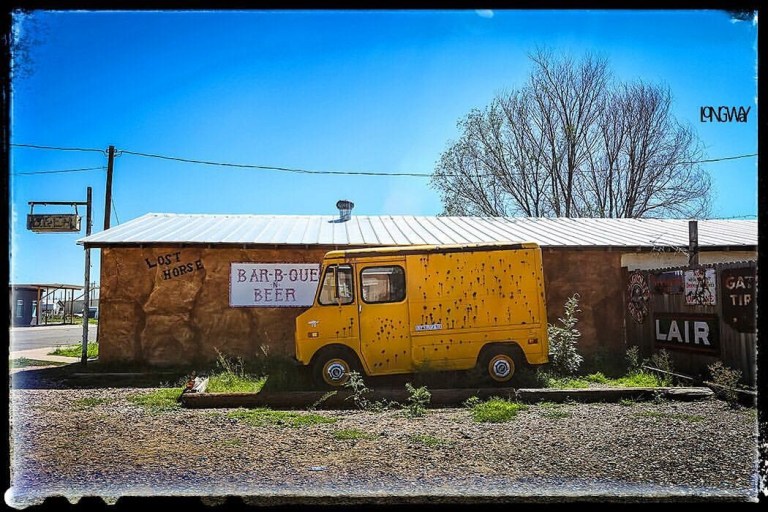
Once you check in and have a cocktail in the hotel lounge, there are some sights that should not be missed. The Lost Horse Saloon is a local bar on the South side of the tracks next to a few of the more well-known arts organizations like Inde Jacobs gallery and Ballroom Marfa. The owner is a bit of a legend in Marfa. Former movie star and real life cowboy, Ty Mitchell is a commanding presence standing over 6 feet tall and rocking an eye patch. Previous interviews explain he injured his eye in Libya during his service with the Merchant Marines. He and his wife, a German novelist, run the bar which only accepts cash and serves very little other than Lone Star Light. They have occasional live music, free pool, and a cozy outdoor courtyard. It is perfectly small town, and perfectly Texas.



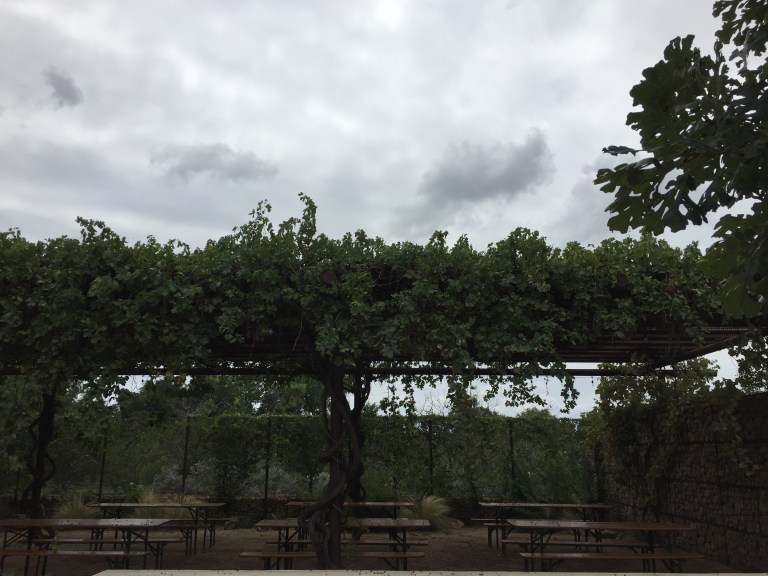
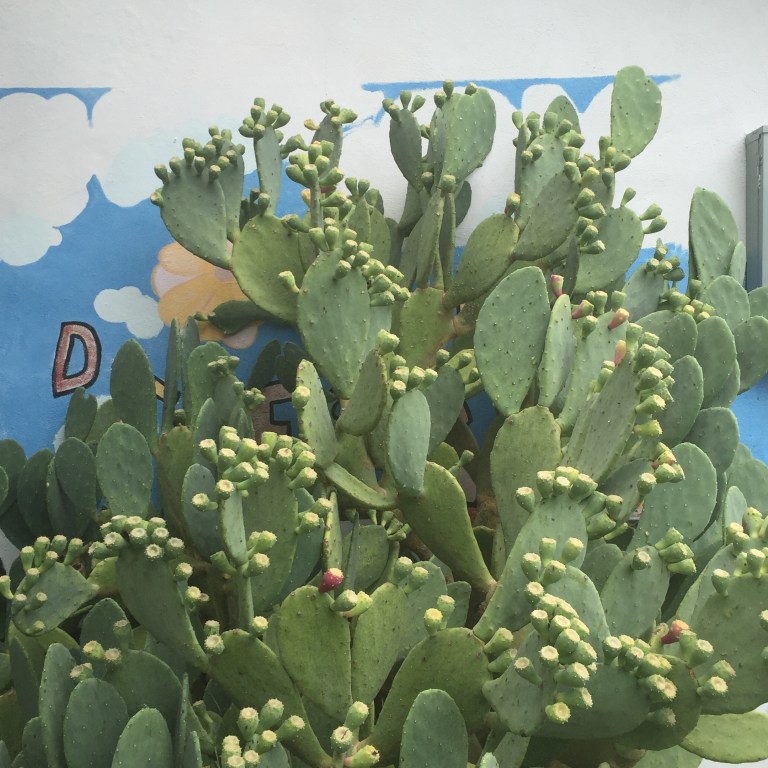
We had barbecue for lunch at the Capri Restaurant at the Thunderbird Hotel on one of the days during our stay. The barbecue options were the only selection available that day, but it was all very high quality. Not a huge fan of barbecue, I found the best part of this visit to be a combination of the tangy and tart hibiscus margarita, and the grounds themselves. The garden is manicured with grapevine covered pergolas, and winding paths lined with cacti and wildflowers, which ultimately lead to intimate spaces with fire pits and benches for star gazing. The Thunderbird is first and foremost a hotel. Starkly minimal in design, the rooms are newly renovated and very private, but they are not priced as well as the Hotel Paisano.
We also spent one evening at Cochineal, a European style restaurant with a great courtyard and tree lights. Although ranked as one of the better restaurants in town, we were wildly disappointed in just about every aspect of our meal. The wine and cocktail selections were average with the one noticeable offering of a drink the locals refer to as “ranch water”, a blend of topo chico, tequila, and lime juice. Everyone agreed the fried artichokes and wedge salad were well prepared, but the risotto was bland, the trout was raw in the middle and the pork sent diners to the bathroom almost instantly. Everything was cold and lacking in flavor. I would give this place one star.

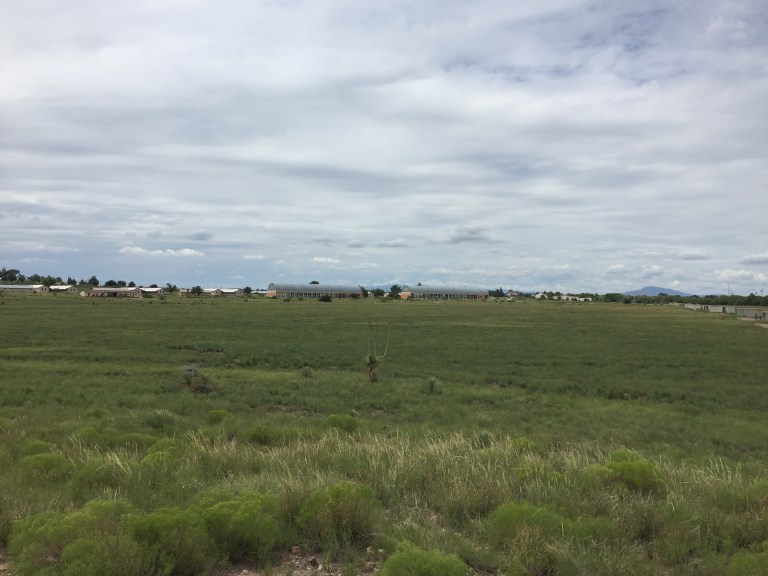
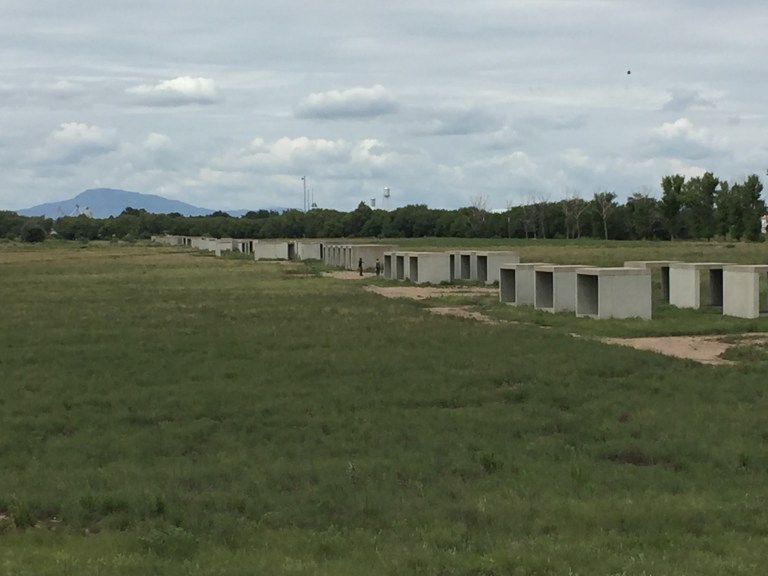
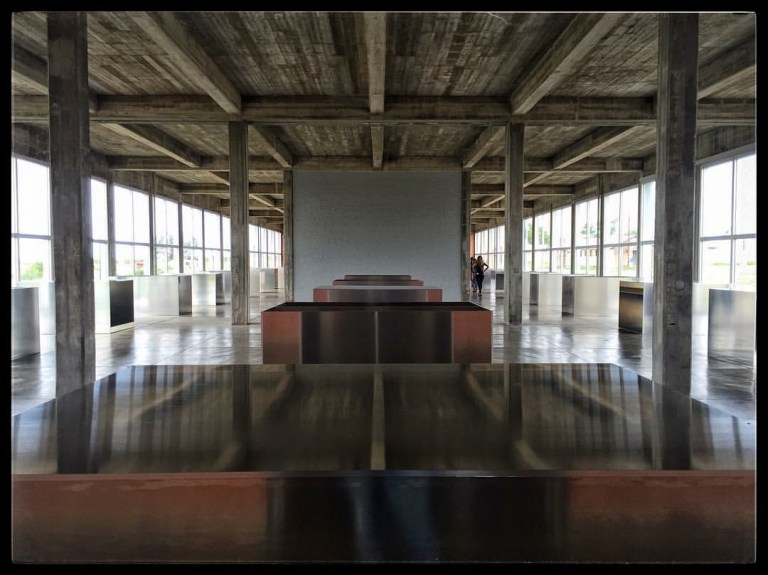
Our primary purpose for visiting Marfa was to explore the art and art institutions that have sprung up over the years. A renowned artist with considerable wealth, Donald Judd acquired land in downtown Marfa as well as ownership of an abandoned Army base previously known as Fort D.A. Russell. The fort was once a highly active military installation during the Mexican Revolution and the second World War. It was deaccessioned after WWII and the town’s population fell dramatically, making property highly affordable. Judd purchased the entire installation with the help of the DIA Art Foundation in the 1970s. With former occupation by both cavalry and artillery troops, the base was comprised of the quartermaster’s house, a series of barracks, stables, mess hall etc. After Judd purchased the property he began work on his series of architectural concrete works, which he installed on a North to South meridian along the edge of the property. Years later he added the domed roofs to the artillery sheds on the base, removed the walls and began fabricating his Untitled, 100 works in Mill Aluminum series, and endeavor that would take him another 4 years.
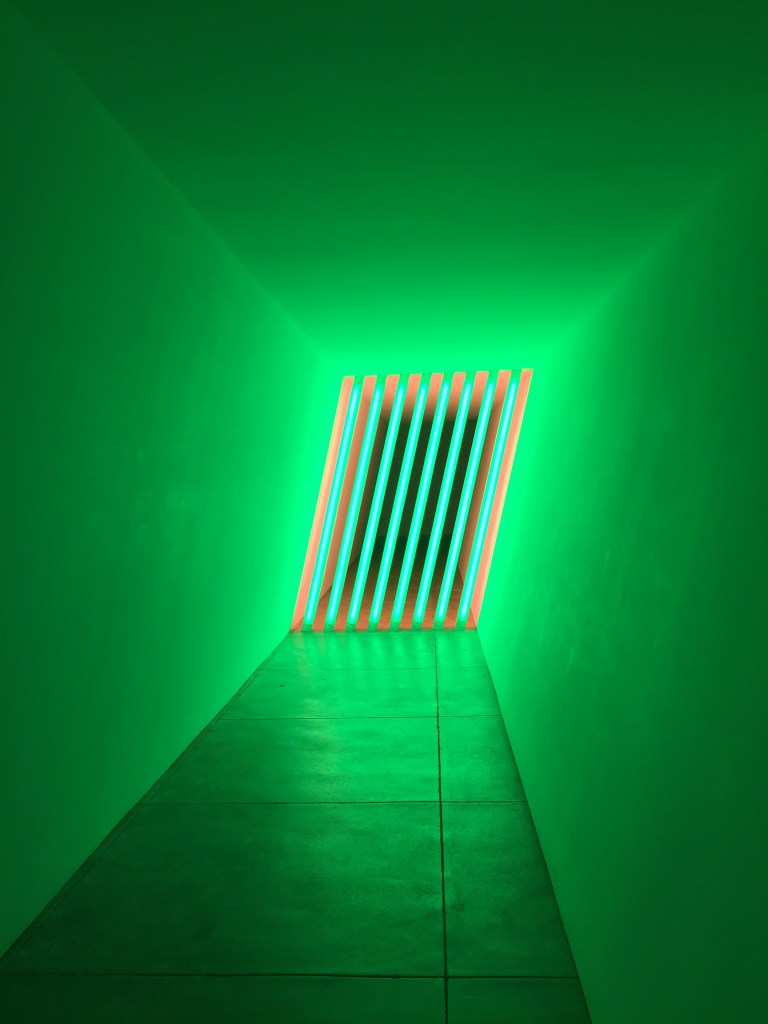
Over time Judd invited his contemporary, Dan Flavin, to produce an installation for the space and the former barracks were reinvented to house Flavin’s iconic lighting sculptures. Each barracks is shaped like a square horseshoe forming 2 wings of the the building. The pieces are located throughout the 6 barracks buildings, comprising 12 wings in total with one piece in each wing.



After Judd’s death, his family founded the Donald Judd foundation and established an endowment to care for the artwork located on the former military base. The base was later entrusted to the newly established Chinati foundation, comprised of members of the Judd family and other trustees.
As part of the “Selections” tour at the Chinati foundation, you will have the opportunity to view Judd’s works in mill aluminum, the Dan Flavin light works, a random horseshoe sculpture by Claes Oldenberg and Judd’s original concrete works. The tour will also take you into the town where you can see the new Robert Irwin installation and his sculpture garden, both housed in what used to the the hospital of Marfa. The last stop on the tour is the downtown Chinati gallery space. Formerly a wool and mohair factory. This immense space contains a series of salvaged metal works by John Chamberlain, which includes his “Texas Series”, 10 pieces he created without the addition of paint or external color combinations. These are considered to be some of his most rare and valuable works. The entire tour is $30 per person and takes about 2.5 hours. The guides are very knowledgeable and allow you to explore at your own pace. It seems unlikely that the additional expense of a private tour would yield much more value. It is important to remember you cannot photograph or film the works without permission from both the Chinati Foundation and the Judd Foundation. Although they were very helpful in expediting our press passes, this is not common, and they request at least two weeks notice for photography or film credentials.
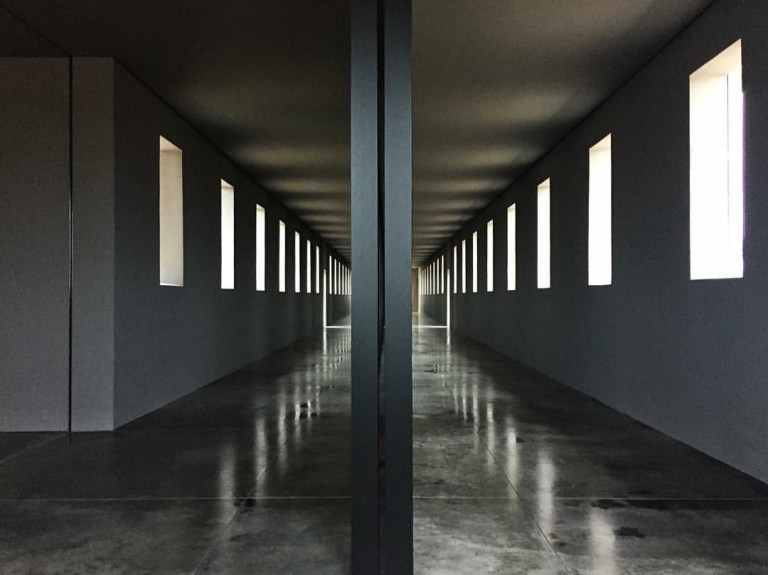

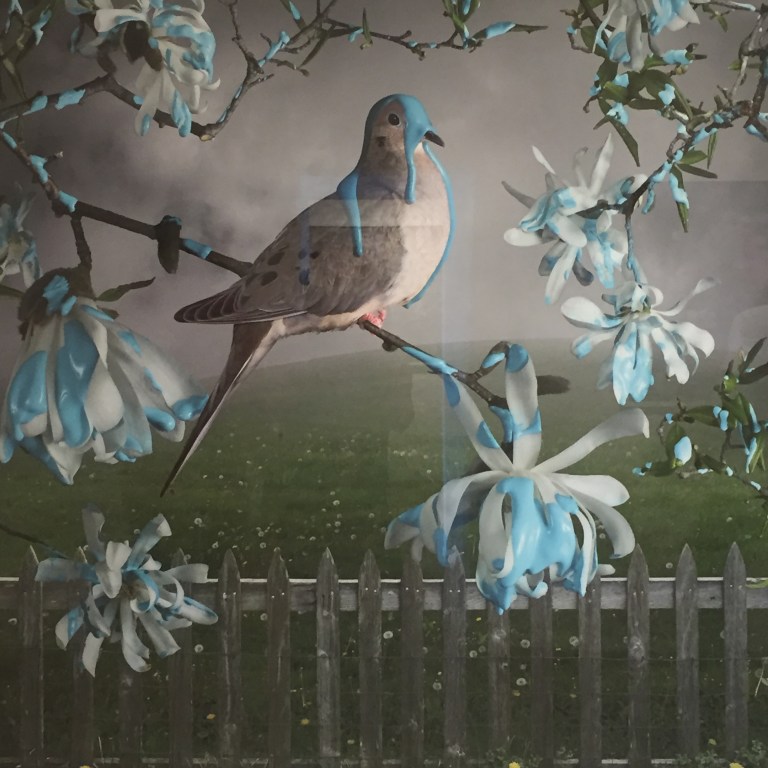
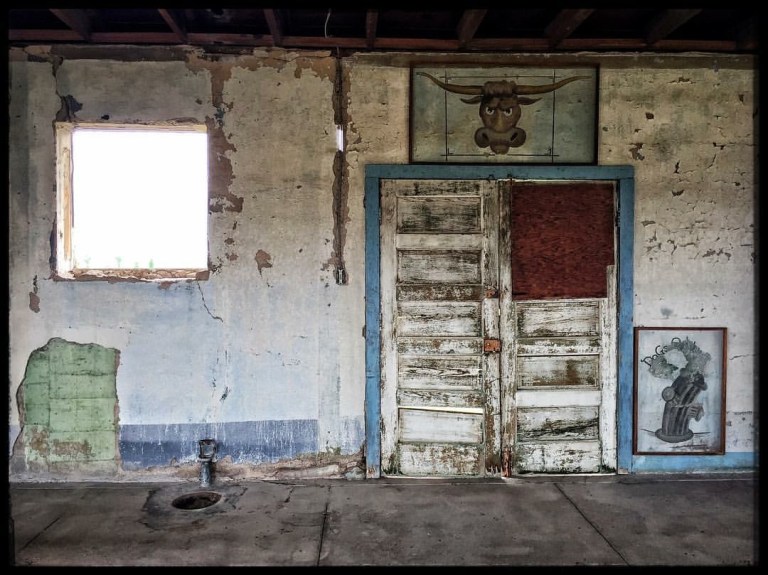
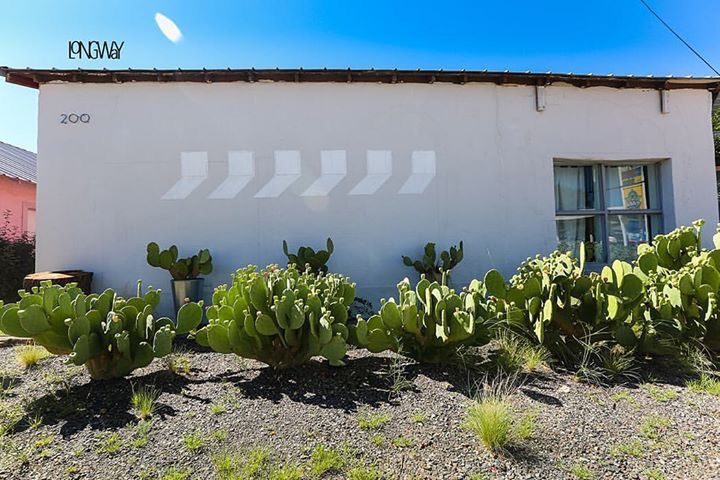
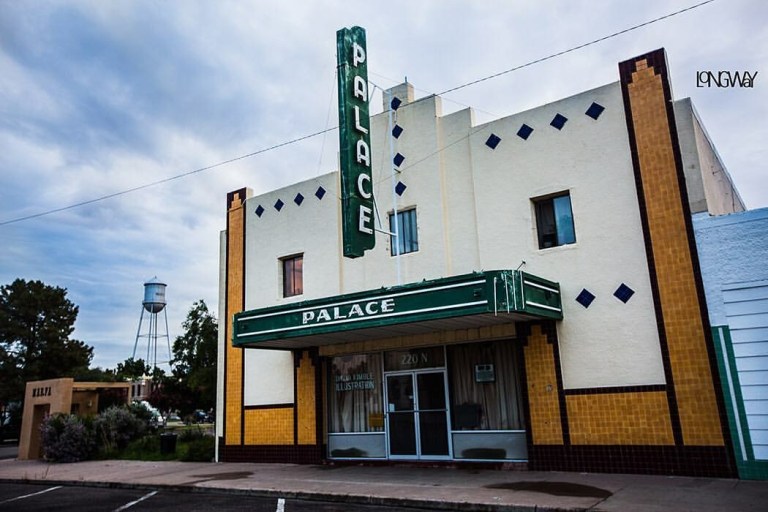
Behind every simple looking façade in Marfa, something beautiful is revealed. Whether it is an architecturally beautiful contemporary art gallery, a modern bookstore, old world saloon, or upscale dining establishment, the exteriors hide perfectly the unique treasures that make the town so special. With only 2,000 full time residents there is little bureaucracy, much collaboration, and a great deal of out of the box thinking. There is almost no industry; the border patrol is the largest employer in the town (despite being more than 50 miles from the Mexico border, Marfa is still an entry point into the U.S. from the Mexican city of Chihuahua). This small town holds enough art, cuisine, culture and the mysterious Marfa Lights to keep you entertained for days.
Why to go:
If you are an artist or arts organization, Marfa is a highly relevant place in the evolution of arts communities, land art, and the avante garde.
When to go:
Every year El Cosmico, a hipster RV park with air streams and yurts for rent, hosts a 3-day music festival called the Trans Pecos music festival. With known artists like Phosphorescent, Nathaniel Rateliff, and Kacey Musgraves, this is a music festival that would rival those found in the larger metropolitan areas of Texas.
Where to stay:
The Hotel Paisano epitomizes the charm and history of the place, but the Saint George has better amenities and a modern aesthetic. If you are feeling adventurous or festive, book an air stream at El Cosmico.
What to do:
Visit the Chinati foundation and spend several hours exploring the works of Donald Judd, Dan Flavin, Robert Irwin, and John Chamberlain. A guided tour makes the trip a lot more interesting, but a private tour is not necessary.
Check out the Marfa lights, an unexplained phenomenon that occurs nightly at nightfall. Lights appear on the horizon and appear to have no logical source or known cause.
How to get there:
If you live in the Southwest, you are close enough to drive. Marfa is located south of I-10 in the panhandle of Texas. The closest airport is in El Paso, which is still almost 3 hours away. Residents told us tales of traveling all day and multiple layovers en route from New York or Los Angeles. There is Amtrak service from several major cities that gets you close to Marfa, but the closest town is Alpine, which is still 25 miles away. There appears to be several car rental agencies in Alpine, but it could be a 30 minute walk from the Amtrak station.


 whytravelfrequently