

 The island of Bali is such a beautiful contradiction. On the one hand Bali is part of Indonesia, the world’s largest Muslim country, a land where women are still marginalized. It is burdened with environmental problems such as air pollution from the slash and burn farming of neighboring Indonesian islands of Sumatra and Borneo, where deforestation is wreaking havoc on the island in the name of harvesting palm oil. It has an extremely high rate of poverty (almost 50%), and is now inundated with constant traffic, thanks to the rush of expatriates who have flocked to the island in the last 20 years. On the other hand, however, it is a lush, beautiful utopia filled with the kindest, most generous, spiritual and inspiring population of locals anyone could hope to find. How does an outsider obtain the most authentic experience in this troubled paradise? WTF spent two weeks traveling the mystical island of Bali to do just this.
Getting there:
Some of the most regular routes to Bali are through Cathay airlines into Hong Kong or Sydney, with a follow-on flight via Singapore Air or Garuda into Denpasar. If you can take the Dreamliner through Tokyo, this is certainly the best of these options. With direct flights from many American cities, even the coach class experience on the Dreamliner is comfortable. Pay extra for an exit row seat to obtain more legroom, or book early and secure a window seat. Although the Dreamliner is actually a Continental craft, it is operated by United Airlines, so your Star Alliance points will count toward a first class upgrade. For 30,000 points and $600 each way it is definitely worth it to upgrade to first class if you are able. Premier Status helps with your position in the queue, but if you are denied the upgrade your points and money will be returned to you. From Tokyo, Hong Kong, Sydney and various other cities you can travel directly into Denpasar. You can do this on a few airlines including Al Nippone, Garuda, or Singapore Air. Al Nippone is the Star Alliance partner for United and is usually what you will be assigned if you do not book your trip in segments. It will be cheaper, but you will rue the day. The coach class seats are some of the most uncomfortable seats you will ever travel in and even the far more expensive business class is hardly worth the price. If you have ever traveled on Emirates, Korean Air, or Singapore Air…this is not like that. For the most posh experience, even in coach class, book this segment on Singapore Air. Even from Tokyo it is 7 hours and that’s a long time to be in a seat that does not recline with the cabin lights on all night long. If you need a more affordable option, consider Garuda Airlines. The planes are small and super funky and very crowded, but the seats are surprisingly comfortable. They all have similar routes and times, it really depends on your price point. Once you arrive most hotels will offer a shuttle to collect your party, or you can hire a driver. Navigating the airport is an interesting experience, too…more on that later.
Where to go:
Our journey began in Ubud, one of the largest cities in Bali. Ubud is about an hour and half drive from the Denpasar airport. It is not geographically far; the traffic is just slow into the city. It is more urban than other areas of the country and has become a center for tourism and culture. The city of Ubud has grown to include the villages and rice paddies that surround it and now hosts a population of more than 30,000 locals and expatriates from around the globe. Ubud is very crowded, with mostly one-lane roads attempting to manage the endless swarm of scooters weaving their way through the city. Traffic in Ubud is really a marvel in itself. There are virtually no traffic laws and there are very few stop signs or stop lights. The entire traffic system operates on understanding the needs of the group must prevail over the needs of the few and the collective consciousness of traffic as a unit. It sounds “new-agey” as a concept, but it’s very evident in the traffic flow in such a crowded place. With no laws and no “right of way” the few vehicles must merge and cooperate with the hundreds of scooters competing for one lane of traffic against feral dogs, roosters, pedestrians and each other. Surprisingly we witnessed not one accident or incident of road rage. In a land where very few homes even have computers, even fewer people own cell phones. There is no distracted driving in Bali, and there is no road rage, only continuous organismal flow. It is painfully slow no doubt, but it is quite beautiful.
Tip: Remember that scene in “Eat, Pray, Love” where Julia Roberts rides her bicycle down an empty dirt road and is almost run over by a speeding Javier Bardem? That scenario could never actually happen. In reality Julia would be riding her bicycle behind a man on a scooter with two children without helmets behind him, one in front and one held in his right arm while he steers with his left. Javier would be stuck behind the man on the scooter dodging a villager carrying 3 roosters in cages on his way to a cockfight.
With this in mind, it is important to consider hiring a driver if your stay is longer than a day or two. You do not need to hire a driver through a tour company, as that will just increase your price. We actually have two very knowledgeable tour guides, who speak English and have reliable vehicles with air conditioning. Please do not pay extra for a tour company when you can obtain the same quality service by hiring a guide directly. It is also nice to know the money you pay for the service goes directly to your guide and driver and not a third party agency, which is likely located in another country.
Where to Stay:
Ubud:
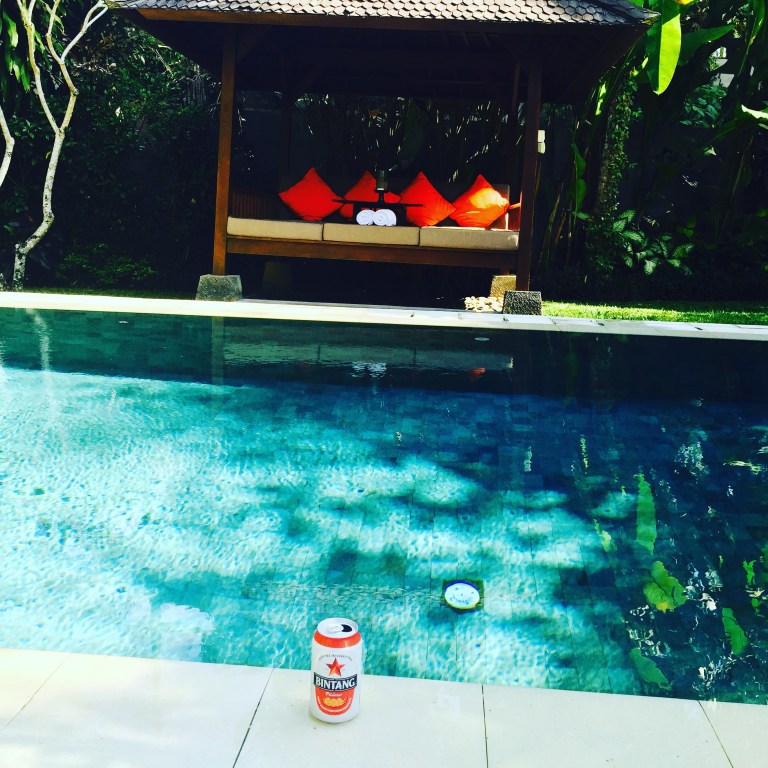
No one in our group speaks Balinese, so we were not comfortable with renting through an individual proprietor in Ubud and selected our lodging through the Fine Hotels and Resorts feature available to American Express Platinum cardholders. This program allows card members to access participating resorts at reduced rates with amenities like early check in and shuttle service, which our group needed. We chose the Samaya Ubud http://ubud.thesamayabali.com. The Samaya is located along the Ayung River Valley with beautiful views of the river valley. At less than $500 per night we found it reasonably priced for the amenities. Every villa has its own plunge pool, and the riverside restaurant on site, Swept Away, has delicious and affordable food. There is a four-course dining option that will take you several hours to complete. If you have the time, it is a wonderful option. If you have a romantic event during your stay you can arrange for private candlelight dining along the river. We saw one event while we were there and it seemed like an unforgettable dining experience. No one is in a hurry and this applies to dining as well. Be patient. If you need to leave and have not received your bill – it is okay to ask for it. The servers typically will not bring it unless you ask – out of respect for your experience. You will find this is true throughout the country.
Daily breakfast and a spa treatment were included in the room rate and each villa had its own butler, who provided afternoon tea, endless Bintang beer, turndown service, and all the bottled water you could possibly want since it is unsafe to drink the tap water. This is important! Do not even use tap water to brush your teeth. If you choose to not stay at a hotel, which will provide unlimited free bottled water for everything including teeth brushing, make sure you purchase plenty for your villa. You can certainly ruin your trip with even a short-term case of “Bali-belly”.
If I were to return to Ubud I would definitely stay at the Samaya. The customer service, cuisine, and spa services provided by the resort were top-notch. Safety is a big concern in Bali, since the 2001 bombings and there was ample security present on the compound, which was very reassuring. This is common in Bali – you will pass through security and metal detectors each time you attempt to enter a hotel or resort and even some restaurants in the coastal towns.
There are obviously much more affordable lodging options within Ubud on airbnb https://www.airbnb.com/s/Ubud–Indonesia if you do not require luxe amenities. If you have a driver, you could stay just about anywhere, as the distance from the city will not be a factor. It will be important to remember to stock your kitchen with groceries and plenty of water, as it might not be an easy walk to town for breakfast if you rent on the local economy and are far from the town center or village. It will become very expensive to hire a driver 24 hours a day and usually they will leave you in the evening after dinner and will not return until morning. Even if you stay in a resort it is inadvisable to walk into town alone. Utilize the hotel shuttle services and plan your day accordingly. This is for your own safety.
Coastal cities – Nusa Dua, Seminyak, Kuta, Jimbarand:
There are a number of coastal cities to choose from and the recommended sequence of traveling is to begin in Ubud and end your trip in one of the coastal communities. Where you stay on the beach depends on what your interest is. Kuta seems to be the best for surfing, and scuba diving, but the best swimming beaches are in Nusa Dua.
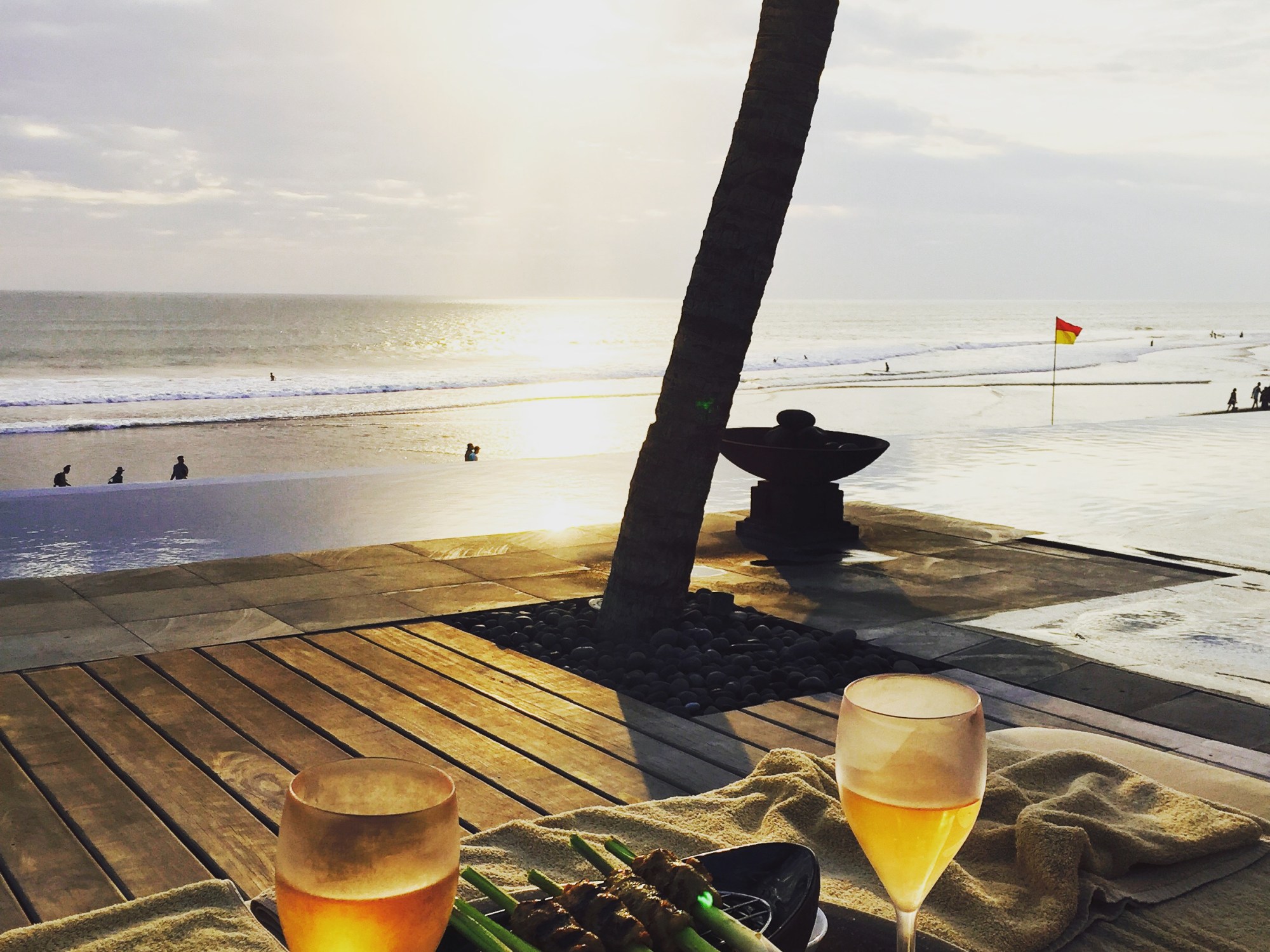
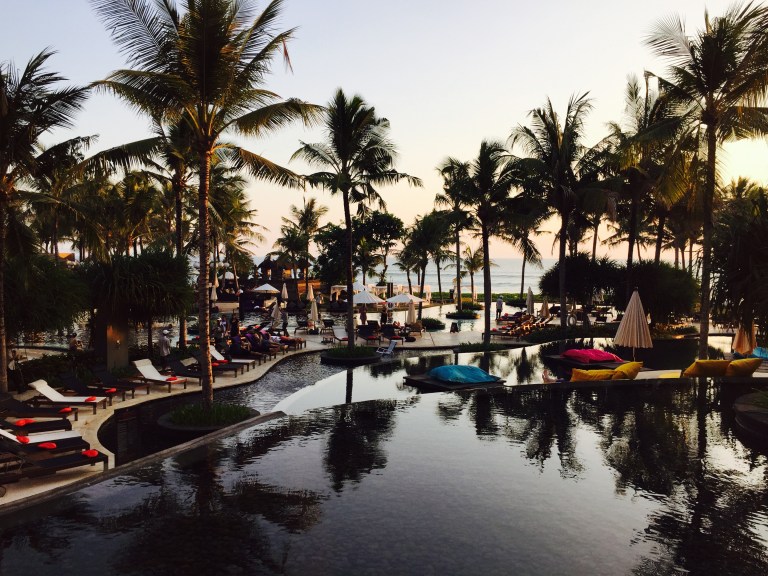
We stayed in Seminyak, where the beaches were accessible, but not as crowded as Kuta or Nusa Dua. It was generally not safe for swimming, however, as there was a dangerous undercurrent along the stretch of beach in front our hotel the Legian http://www.ghmhotels.com/en/club-legian/. There is also plenty of shopping and nightlife for those looking for a more touristic experience. While we appreciated the affordable boutique shopping, we found the nightlife not unlike any other tourist scene in Miami Beach or Cabo. If that is the kind of scene you are looking for Potato Head, Ku De Ta and Woobar at the W are very popular with the tourists.
What to do:
Ubud is full of talented artisans and each village, or collection of villages, is typically known for a trade – sculpture, jewelry making, batik, woodworking. Some shops have adjusted their prices for tourism, but many still offer their high quality products at close to local rates. Should you wish to purchase a piece of art that cannot fit in your suitcase, your guide can help you arrange for shipping. Spend a day taking in the artisanal sites if you can. Because traffic is so slow, you will need to dedicate a half a day to this at least, more if you want to also see the John Hardy jewelry factory http://www.johnhardy.com/visit-us-in-bali. While the factory is really a marvelous structure and it is great to learn of the contributions John Hardy has made to the Balinese people, keep in mind the jewelry prices at the factory are only about 20% less than at the duty free shop at the airport.
The Ubud Monkey Forest Sanctuary is worth visiting http://monkeyforestubud.com. The sacred sanctuary is home to a population of Macaque Monkeys. The preserve surrounds a temple, which is not accessible to the public, but there are paths to walk and the monkeys are very friendly. If you have not spent time in the company of monkeys, this is a unique opportunity.
From your home base in Ubud, most half-day excursions such as volcano-climbing or waterfall-hiking will require a 2-hour drive and an early departure. It is possible to combine both into one day if you manage your time well. The Sekumpul waterfall is the most popular, but you could easily choose another waterfall that is closer to better accommodate your daily itinerary.
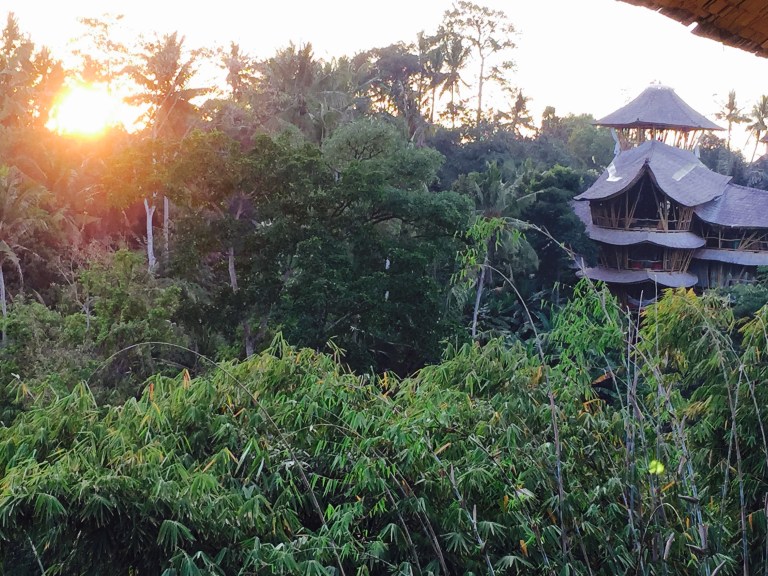
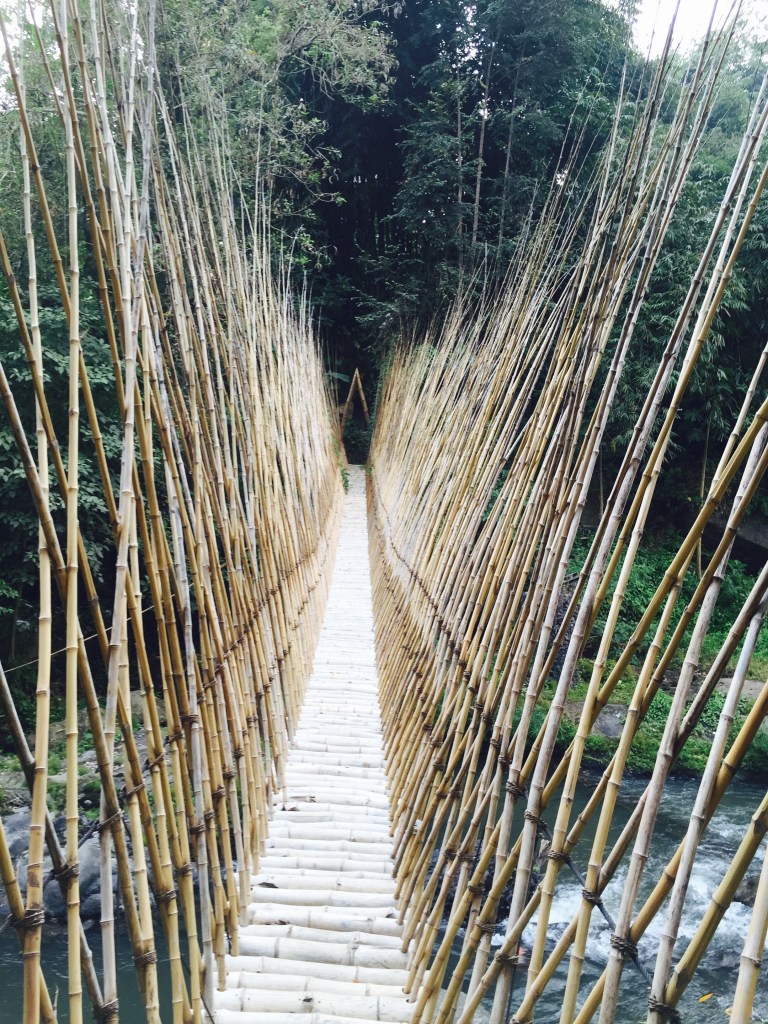
If you have time an overnight visit to the Green Village http://greenvillagebali.com is a must. John Hardy is a very prominent entrepreneur in Indonesia having made his fortune creating jewelry in Bali for decades. With time he dedicated his efforts to improving the living conditions for the people whom had embraced him and contributed to his success over the years. He founded the Green School http://www.greenschool.org and his daughter, Elora, founded the bamboo company Ibuku http://ibuku.com, which has designed and created the iconic bamboo homes found in the Green Village. Although privately owned and often occupied by their respective owners, the homes are occasionally available for rent with prices between $300 and $1000 a night. The Sharma Springs House http://ibuku.com/projects/sharma-springs-2/ is a breathtaking marvel. It is 6-stories, has 5-bedrooms and is arguably the most beautiful house in all of Indonesia. If you can stay here it is well worth the $1000 per night price tag.
Please reach out to us if you are interested in booking a home at the Green Village and we can put you in touch with the local staff.
A tour of the Green School is not necessary unless you are considering submitting an application for a child to attend. However, while you are staying at the Green Village you may have an opportunity to volunteer in one of their sustainability initiatives. Reach out to us if you are interested in finding out more about this.
Where to Eat:
In Ubud there are a number of small family-run “warungs” where you can experience local fare. Many of the dishes consist of duck and pork, and rice is a consistent staple. It is not tremendously spicy and the satay is fun treat. If you can visit a coffee plantation or tea house the lemon ginger tea is a delight and the Luwak coffee is definitely something to try if you have an adventurous palate.
In Seminyak La Lucciola was a nice Italian restaurant with seaside views. Starfish Bloo and Fire at the W Resort were both delightful and amazingly priced (7 people had sushi and wine for 4 hours at Starfish Bloo and our bill was only $250 USD).
Things to Consider:
- When you arrive at the airport there will be throngs (I mean hundreds) of people forcing themselves upon you to carry your bag for a tip. These folks do not work for the airport or the tour company and will often just pick up your bag without your permission. It is totally your right to demand they put your bag down. You are under no obligation to allow them to do this or pay them for this service. Pick pocketing is not a major problem in Bali, so you do not have to worry about your bag being stolen if you do decide to accept the help. Keep 500,000 rupiah available (about 2 dollars) if you want this service. They will harass you and it is your job to firmly tell them no and you might have to do this multiple times.
- Negotiating prices in the markets is common, but not necessary unless you find it varies too much from place to place. The American Dollar is worth about 1200 Indonesian Rupiah so your money will go quite far even when shopping in the villages.
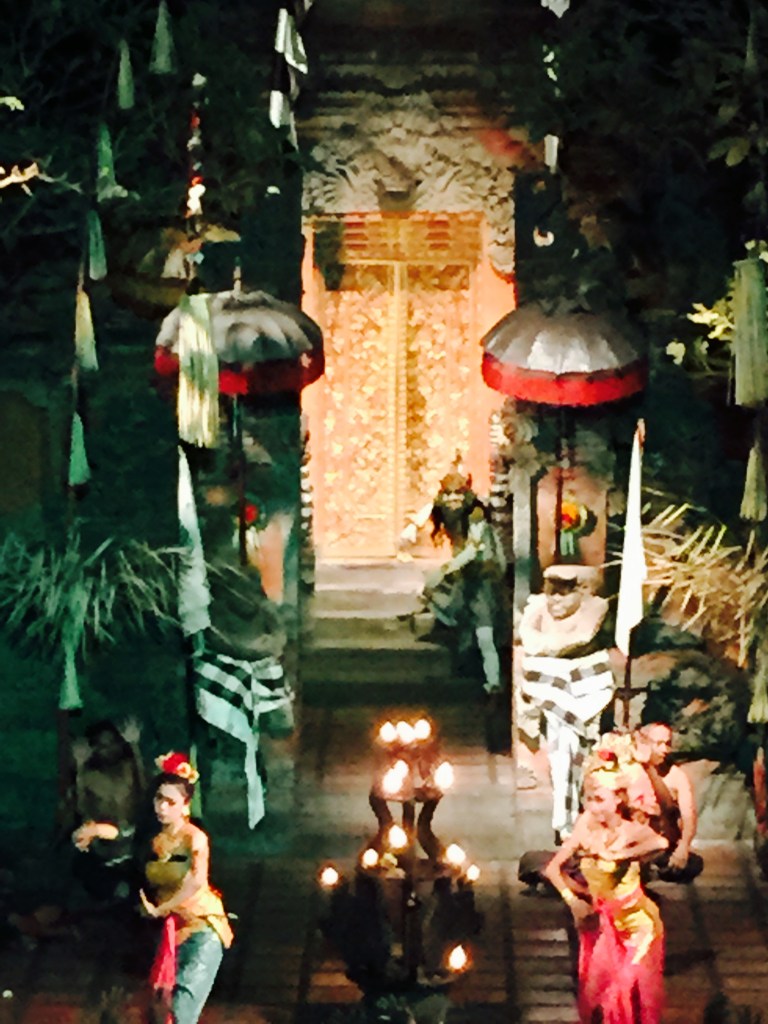
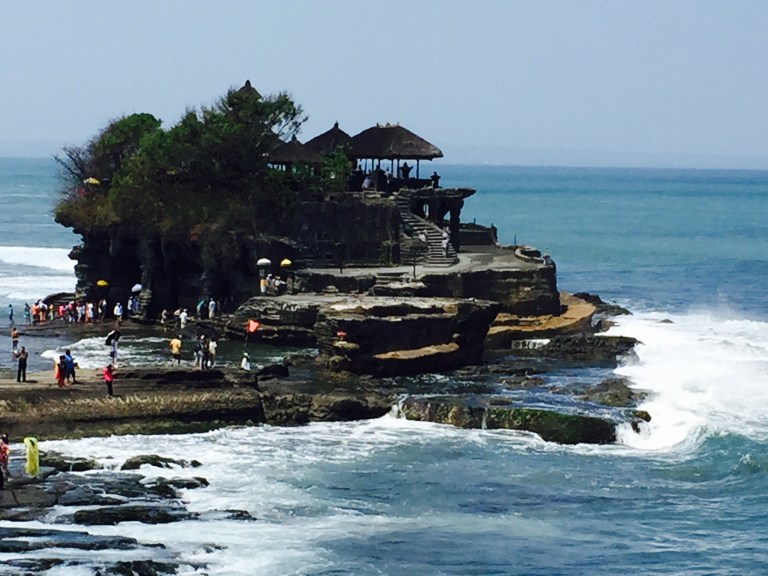
- The Balinese people are very spiritual and practice a blend of Buddhist and Hindu religions called Shiwa Buddhism. Each family builds a temple for prayer and each community has a temple for festivals. There are thousands of temples on the island of Bali and some are very similar while others are architecturally more interesting and attract more tourists. Choose one or two to visit such as Pura Tanah Lot or Pura Besakih. You cannot possible visit every temple and many of the village temples lack the magnificence of these more prominent temples.
- Despite practicing such a spiritual faith, the Balinese culture is still very patriarchal. They follow very specific gender roles and as a female traveler, even if you are in charge of your group, you might find yourself ignored by the men, even your tour guide. They do not mean to be disrespectful – it just seems implausible to them that a woman would be the spokesperson for the group. He won’t be hostile it just might be necessary to assert your role within the group early as they are always inclined to address the men in your group for decisions and payment.
- Give yourself plenty of time to return to the airport and clear customs – plan for at least two hours once you get to the terminal in case something goes wrong like you get dropped off in the wrong terminal or no one at the check in counter speaks English.
- Ask your guide to teach you some phrases. Simply learning a few common expressions really goes a long way.

 whytravelfrequently